
Their screen time, well spent
Paediatricians recommend less than an hour of screens a day between 7 and 12, school included. Every day Bloomiko prepares a session of about twenty minutes to learn, practise and review what they will need at school and beyond.

Bloomiko: about 20 minutes · You choose the daily maximum; when it is reached, the app rests until tomorrow
Source: Spanish Association of Paediatrics, Plan Digital Familiar (2024)
Their data is theirs
What your child does in Bloomiko is used for one thing only: fitting their plan and showing it to you in the parents’ panel, with your permission.
How we look after their data
Never sold or shared
Not with advertisers, not with anyone. There are no ads in the app.

No analytics, no tracking
The children’s app has no analytics tools and no third parties following them.

Never used for training
What they write, say or draw only goes through services that are forbidden to keep it or learn from it.

Only for you
Their progress shows in the parents’ panel, behind your PIN. You can ask for it to be deleted whenever you like.
What those minutes hold
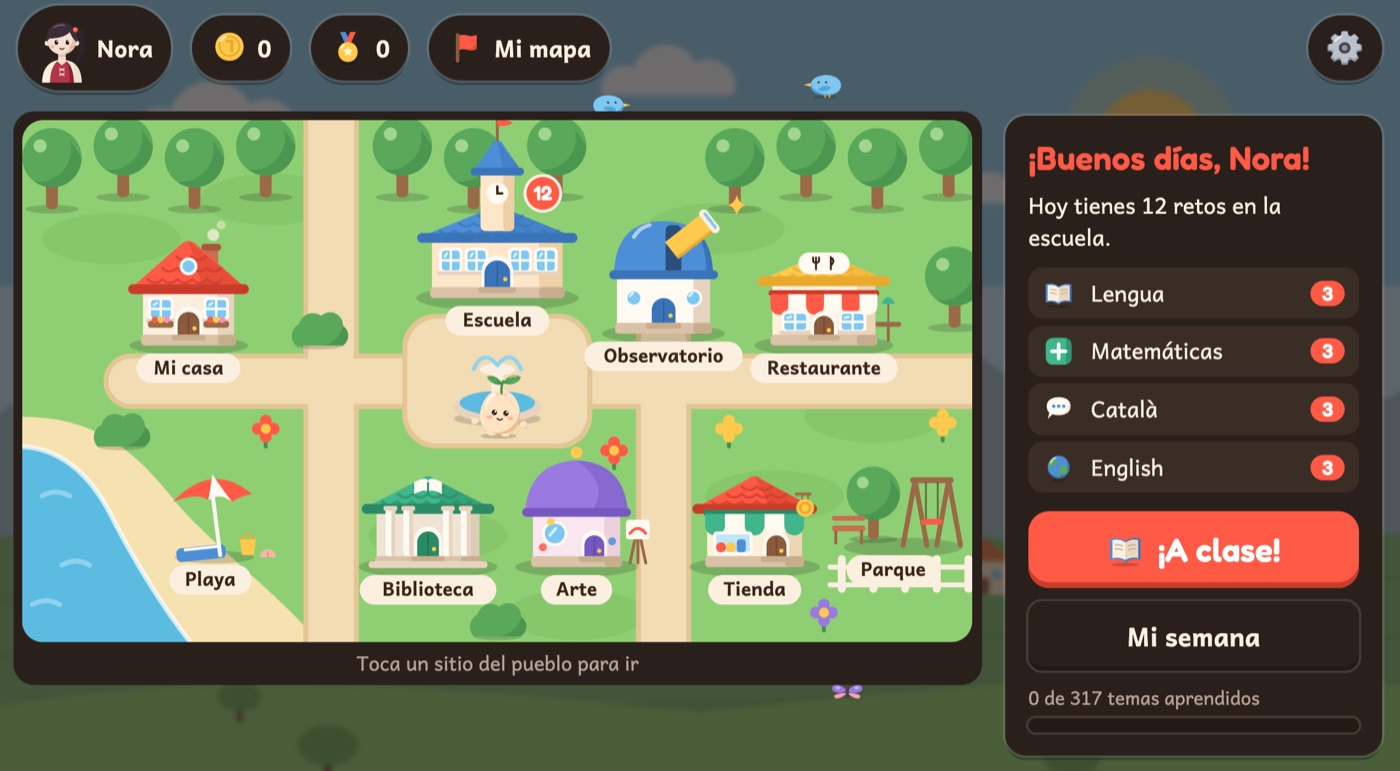
They open their village and find the day’s session ready. No videos that lead to more videos and no ads: reading, maths and whatever they are discovering.
A plan for every day
Reading and maths for their year, with reviews of what they were starting to forget. The plan changes with yesterday’s answers.

A village of their own
Their character, their house and a shop where they spend the coins they earn by learning. Coins cannot be bought.

Lab and observatory
3D scenes to look at the sky, a volcano or the inside of the body, and see how they work.

Catalan and English
If they need them at home or at school, they practise with short sentences and a voice, at their level.

No ceiling
If they are ahead, they keep going. If something is hard, they go back to the class that explains it before moving on.

A panel for you
What they practised, what they have mastered and what they find hard, with reports and short tests compared with norms for their age. Made to support them, not to label them.
How it decides what comes today
Behind the village there is an engine with fixed rules. It does not improvise: it looks at their answers and applies what is known about how people learn.

Review just before forgetting
What they learned comes back after 1, 2, 4, 7, 14, 30 and 60 days. A miss brings the review closer; a hit pushes it further away.
Not too easy, not too hard
It aims for seven or eight right out of ten. Right first time, it goes up a step; stuck, it goes down one and explains it another way.
Six ways to teach the same thing
A straight question, a game, a story, a worked example, spot the mistake, and teach it to their pet. The engine checks which works for each child by what they remember the next day, not by which they like best.
Hints, never the answer
The tutor gives hints and draws on the board, but never solves the exercise and never marks it. Marks come from rules anyone can read.
Written and checked by hand
Lessons and questions come from a library written and checked by people. Nothing is made up on the spot.
Everything it includes
Over 300 primary-school topics, from reading and adding to volcanoes, feelings and money. Look for the ones you care about.
 Comprender un cuento corto
 Comprensión: ¿por qué pasó? ¿qué pasará?
- Comprensión: escucho un cuento y respondo
 Escribir bien: letra clara dentro de las líneas
- Escribir una frase
 La r suave, la r fuerte y la rr
- Leer frases cortas con comprensión
- Leer palabras con dibujo
- Leer sílabas
- Mayúsculas: al empezar y en los nombres
- Ortografía: m antes de p y b
 Rimas: palabras que suenan igual al final
- Sílabas trabadas: pla, bra, tre…
- Sonido de cada letra
- ¿De qué trata? La idea principal y el título
 Familias de palabras, diminutivos y aumentativos
 La sílaba que suena más fuerte
- Leer entre líneas: por qué pasa y cómo se sienten
- Leer un texto y encontrar un dato
 Masculino y femenino, singular y plural
- Nombre, verbo y adjetivo
- Orden alfabético: buscar en el diccionario
- Ortografía: b y v
- Ortografía: c, qu y z
- Ortografía: g, gu y gü
- Ortografía: palabras con h
- Pasado, presente y futuro
- Principio, nudo y final: ordenar una historia
 Signos de pregunta y de exclamación
- Sinónimos y antónimos
- La tilde: agudas, llanas y esdrújulas
 Capacidad: lleno, vacío y el litro
 Comparar números (<, >, =)
 Contar de 2 en 2, de 5 en 5 y de 10 en 10
 Contar hasta 20
- Contar y leer hasta 100
 Cuerpos geométricos: cubo, esfera, cilindro, cono y pirámide
- Decenas y unidades
 El doble y la mitad
 Leer el reloj: en punto y y media
 Líneas rectas y curvas, abiertas y cerradas
 Los días de la semana: antes, después, ayer y mañana
 Mapas: arriba, abajo, izquierda y derecha
- Mapas: casillas con letra y número
- Mapas: más cerca y más lejos
- Medir en centímetros y metros
- Medir: más largo, más corto y cuántas unidades
 Nombres de figuras
 Números ordinales: primero, segundo… décimo
 Números pares e impares
- Pesar: más, menos y el kilo
 Problemas de un paso
- Reloj: la aguja de las horas
 Repartir en partes iguales
 Restar hasta 10
- Restar llevando hasta 100
- Seguro, posible e imposible
 Sumar hasta 10
- Sumar llevando hasta 100
- Sumar sin llevar hasta 100
 Tablas y gráficos de barras sencillos
- Centenas, decenas y unidades
 Comparar fracciones
- Comparar números hasta 1000
- Dividir con las tablas
- Dividir: repartir y hacer grupos iguales
- División con resto: cuántos caben y cuánto sobra
- Fracciones: medios, tercios y cuartos
- La fracción de una cantidad (un cuarto de 12)
 Mapas: seguir un camino (ampliación)
 Multiplicar como suma repetida
- Multiplicar por una cifra (23 × 4)
- Números hasta 10 000: unidades de millar
- Números hasta 1000: antes, después, de 10 en 10 y de 100 en 100
- Problemas de dos pasos
- Problemas de multiplicar y dividir
 Redondear a la decena
- Reloj: y cuarto y menos cuarto (ampliación)
- Restar llevando hasta 1000
- Sumar llevando hasta 1000
- Tablas del 2, del 5 y del 10
- Tablas del 3, 4, 6, 7, 8 y 9
 Decimales con euros y céntimos
- Dividir entre una cifra (84 : 4)
- Fracciones equivalentes
- Multiplicar por dos cifras
 Accions en català: córrer, menjar, dormir…
- Articles: el, la, l'
 Català: animals
 Català: colors
- Català: llegir paraules
 Català: menjar
- Català: nombres fins a 20
 Català: saludar i donar les gràcies
 Com em sent (català)
- Comptar síl·labes
- Dies, mesos i estacions (català)
- El cos en català
 El temps que fa (català)
 L'escola en català
 La casa en català
 La família en català
 La roba en català
- Llegir frases en català
 Paraules contràries
- Singular i plural
- Actions: run, swim, eat…
- Clothes
- Days and seasons
- Family words
- Feelings
- Food in English
- Greetings: hello, thank you…
 I can, I can't
 I like, I don't like
- In the classroom
- Inglés: animales
- Inglés: colores
- Inglés: números hasta 20
- My body
- My house
- Opposites: big, small…
- Plurals: one cat, two cats
- Reading short sentences
- Reading words
- The weather
 Toys
 Agua: estados y ciclo
 Alimentos de cada día y de vez en cuando
 Animales: cómo comen, se mueven, nacen
 Antes y ahora: la línea del tiempo
 Beber agua (y no refrescos)
 Comida que da energía
- Cómo nacen y qué comen los animales
- Cuerpo, sentidos y hábitos sanos
 Día, noche y estaciones
 El agua y la lluvia (1): el viaje del agua
 El aire (1): la atmósfera y el ozono
 El cerebro (1): el jefe del cuerpo y los nervios
- El corazón (1): dónde está y qué hace
 El escarabajo (1): cómo es
- El grillo (1): cómo es
 El mar de Mallorca (1): la pradera de posidonia
 El mosquito (1): cómo es
 El plato saludable: mitad verdura y fruta
 El saltamontes (1): cómo es
 El sistema solar (1): el Sol y sus ocho planetas
 El sonido: vibrar, fuerte y suave, agudo y grave
 Empujar, tirar, caer, rodar
 Fiestas y tradiciones de Mallorca
 Grupos de alimentos
 La abeja (1): cómo es
- La digestión (1): el viaje de la comida
 La hormiga (1): cómo es
 La libélula (1): cómo es
 La luciérnaga (1): cómo es
 La Luna (1): qué es y por qué brilla
 La luz y las sombras
 La mariposa (1): cómo es
 La mariquita (1): cómo es
- La piel (1): tu abrigo y el tacto
 La sangre (1): qué lleva y por dónde va
 Las células (1): los ladrillos de la vida
 Los dientes (1): sus formas y los de leche
 Los dinosaurios (1): herbívoros y carnívoros
 Los huesos (1): el esqueleto y las articulaciones
 Los medios de transporte
 Los músculos (1): qué hacen y dónde están
 Los oficios
- Los pulmones (1): dónde están y cómo respiras
 Los volcanes (1): qué hay dentro de un volcán
 Materiales: duro, blando, flota, se hunde
- Mi isla: Mallorca y las Illes Balears
 Plantas: partes y qué necesitan
 Predecir, probar y comprobar
 Reciclar: qué va en cada contenedor
- Riñones y vejiga (1): qué hacen
 Seres vivos e inertes
 Un buen desayuno
- Vertebrados e invertebrados; mamíferos, aves, peces, reptiles y anfibios
 ¿Es verdad? Preguntar y comprobar
 Circuito eléctrico simple
 Dieta mediterránea: aceite de oliva, legumbres, pescado
 Ecosistema mediterráneo y posidonia
- El agua y la lluvia (2): evaporación, condensación y lluvia en la montaña
- El agua y la lluvia (3): el agua que bebemos y las tormentas
- El aire (2): las capas y el agujero de ozono
- El aire (3): el calor de la Tierra y las plantas
- El cerebro (2): sus partes y sus zonas
- El cerebro (3): aprender, dormir y cuidarlo
- El corazón (2): cámaras, válvulas y el viaje de la sangre
- El corazón (3): los dos viajes y cómo cuidarlo
- El escarabajo (2): muchísimas clases
- El escarabajo (3): los recicladores
- El grillo (2): su canción
- El grillo (3): el termómetro de la noche
- El mar de Mallorca (2): pulpos, tortugas y basura
- El mar de Mallorca (3): la playa, las anclas y Cabrera
- El mosquito (2): por qué pica
- El mosquito (3): su lugar en la naturaleza
- El saltamontes (2): oír y cantar
- El saltamontes (3): en la cadena del campo
- El sistema solar (2): cómo es cada planeta y qué es un año
- El sistema solar (3): por qué hay vida en la Tierra y viajar al espacio
 Fruta y verdura de temporada en Mallorca
- La abeja (2): la colmena y el baile
- La abeja (3): flores, frutas y miel
- La digestión (2): esófago, estómago e intestinos
- La digestión (3): energía, bacterias buenas y fibra
- La hormiga (2): el hormiguero y los caminos de olor
- La hormiga (3): limpiadoras y jardineras
- La libélula (2): vida en el agua
- La libélula (3): cazadora antigua
- La luciérnaga (2): su luz y sus mensajes
- La luciérnaga (3): noches oscuras
- La Luna (2): las fases y las mareas
- La Luna (3): ir a la Luna y los eclipses
- La mariposa (2): la metamorfosis
- La mariposa (3): flores y viajes
- La mariquita (2): su vida y sus colores
- La mariquita (3): la amiga del huerto
- La piel (2): capas, sudor y heridas
- La piel (3): el sol y los dedos arrugados
- La sangre (2): sus células y las heridas
- La sangre (3): defenderte y donar
- Las células (2): núcleo, pilas y plantas
- Las células (3): crecer, curarse y los microbios
- Los dientes (2): por dentro y la caries
- Los dientes (3): cepillarse y el diente nuevo
- Los dinosaurios (2): huevos, crías y por qué desaparecieron
- Los dinosaurios (3): los fósiles, las aves y el Myotragus
- Los huesos (2): por dentro y cómo se curan
- Los huesos (3): cuidarlos y los dinosaurios
- Los músculos (2): tendones, parejas y tipos
- Los músculos (3): cansancio y entrenamiento
- Los pulmones (2): el árbol de aire, el diafragma y los alvéolos
- Los pulmones (3): el viaje del oxígeno y cómo cuidarlos
- Los volcanes (2): la erupción y las islas que nacen
- Los volcanes (3): las capas de la Tierra y los terremotos
- Riñones y vejiga (2): los filtros, los tubos y la bolsa
- Riñones y vejiga (3): el agua, el baño y el equipo del cuerpo
 Joan Miró y sus colores
 Los instrumentos: percusión, viento y cuerda
- Mezclar colores: primarios y secundarios
- Simetría: las dos mitades iguales
 Clasificar por 1 y 2 atributos
 Dar una razón (porque…)
- Hacer preguntas propias
- Pensar en un contraejemplo
 Pensar por mí, aunque todos digan otra cosa
 Secuencias de órdenes (programar un camino)
 Series AB, AAB, ABC
 Si… entonces…
- Cambiar de opinión con buenas razones
- Deducir con pistas (tabla lógica 2×2)
- Distinguir hecho y opinión
- Atender en clase y no distraerme
 Calmarme: respirar, contar, pedir un abrazo
 Cuidar algo varios días
- Cuidar los deberes: sin dibujos y con buena letra
 Cumplir lo prometido
- Dar las gracias y ser amable
- Decir la verdad cuando cuesta
- Decir que no y pedir ayuda a un adulto
- Equivocarse es parte de aprender
- Hablar bonito: sin palabrotas ni insultos, también cuando me enfado
- Me quiero y me hablo bien
- Mi cuerpo es mío y el de los demás es suyo: pido permiso antes de tocar
 No hace falta caerle bien a todo el mundo
- Nombrar emociones propias y ajenas
- Pedir perdón y reparar
- Ponerse en el lugar del otro
- Pruebas morales: ¿qué harías tú?
- Qué es justo (repartir, turnos)
 Qué hacer cuando estoy muy enfadada o triste
- Que no me manipulen
- Resolver un conflicto hablando
- Respetar el espacio personal (mi burbuja y la de los demás)
- Saludar, pedir, agradecer, esperar turno
 Seguir una rutina
- Tratar bien a mis amigos
- Unirse a un juego e invitar
- Casa: fuego, enchufes, cuchillos, medicinas
- Cruzar la calle y aparcamientos
 Dormir bien
 En internet: no doy datos, no hablo con desconocidos, aviso a un adulto
 Lavarse las manos y los dientes
 Llamar al 112 y qué decir
 Mi cuerpo es mío: partes privadas y contacto que no está bien
- Mi nombre completo, dirección y teléfono de casa (solo para emergencias)
- Mis adultos de confianza (a quién se lo cuento)
- Moverse y jugar fuera
- No, me voy y lo cuento
 Pantallas con medida
- Personas tramposas: piden ayuda a un niño, ofrecen regalos o piden secretos
 Playa y piscina: bandera, adulto mirando, corrientes
 Si alguien me trata mal o se ríe de mí (acoso): qué hago
 Si me pierdo: me quedo, pido ayuda a una madre con niños o a un trabajador
 Si se meten conmigo: defenderme del acoso
- Sol y calor: agua, sombra, gorra
 Sorpresas sí, secretos que hacen sentir mal no
 Ahorrar para algo que quiero
 El tiempo, el termómetro y qué ropa ponerse
- Leer el mapa de un pueblo: qué hay al lado de qué
 Lo que necesito y lo que me apetece
 Los anuncios quieren que compres
- Los meses, las estaciones y las fechas
- Monedas: cuánto dinero hay
 Pagar y el cambio
- Para qué sirve el dinero y de dónde viene
 Primeros auxilios: rasguños, golpes, quemaduras y picaduras
- Señales y carteles que hay que conocer
- ¿Cuánto falta? Planear el tiempo y llegar a la hora
- La tarjeta, el banco y el dinero que no se ve
- Los puntos cardinales: norte, sur, este y oeste
- Más caro, más barato y la lista de la compra
- Reloj digital y reloj de agujas
No topic like that. Try another word.
Personal-safety topics appear once you turn them on in the parents’ panel. Topic names are in Spanish, as in the app.
The science behind it
Every way Bloomiko teaches comes from education research. Here are the studies it builds on, so you can read them yourself.
Remembering is practice
Trying to recall something without looking fixes it better than reading it again. In nursery and primary school the effect is clear, especially when it takes some effort but works.
Fazio and Marsh, 2019 · Read the study
Spread-out reviews
Of ten study techniques reviewed, spacing reviews over time and testing yourself had the strongest evidence.
Dunlosky et al., 2013 · Read the study
Mixing problem types
Year 4 children who practised with mixed problem types got 77 % right the next day, against 38 % for those who practised in blocks.
Taylor and Rohrer, 2010 · Read the study
Worked examples
Across 55 studies, seeing an example solved before practising improved learning by about 18 percentiles compared with solving alone.
Barbieri et al., 2023 · Read the study
Spot the mistake
Pupils aged 11 and 12 who corrected other people’s mistakes remembered more a week later, even though they enjoyed it less.
Adams et al., 2014 · Read the study
Teaching someone else
Children who teach a character try harder and learn more, especially when the subject is hard for them.
Chase et al., 2009 · Read the study
Feedback that explains
An analysis of 435 studies: feedback helps when it says what happened and what to try, not just «right» or «wrong».
Wisniewski, Zierer and Hattie, 2020 · Read the study
Praising effort
Telling children «you’re clever» made them give up sooner after a mistake. «You worked hard» had the opposite effect.
Mueller and Dweck, 1998 · Read the study
Fitted to each child
A tutor that chose activities from each child’s progress, tried with 400 pupils aged 7 and 8, taught better than an expert’s fixed sequence.
Clément et al., 2015 · Read the study
What we don’t do
Learning styles
We don’t ask whether a child is «visual» or «auditory»: there is no evidence that teaching to that style works. We measure what works for them.
Brain training
Games that promise to train memory don’t improve anything else. Here they practise exactly what they want to learn.
Rewards that buy motivation
Coins come from learning and effort. Expected rewards can dampen children’s own drive, so there are no rewards just for logging in.
A calm screen
An app for children has to look after them before it teaches them. These rules don’t change.

No ads, no purchases
Their app has no ads, no payment buttons and no surprise boxes. Anything paid sits behind the parents’ PIN.
No streaks that punish
Missing a day costs nothing. No pushy notices, no countdowns.
You decide
With the parents’ PIN you choose the daily maximum and which classes are included. You give the permission to keep their data.
Checked content
Lessons are written and checked by hand. Some illustrations and the voice are made with automatic tools and are checked before the child sees them.
Prices
There will be a genuinely free version, with no ads and no limits that punish, and family plans with everything else. Families on the list will hear the prices first.
Questions
What ages is it for?
Primary school, above all the first years, which is where it has most lessons today. If a child is ahead, they keep going. Paediatricians advise against screens before 6, and the app is not meant for that age.
Which devices does it run on?
In the browser of a tablet, a computer or a phone. On an iPad you can add it to the home screen and it opens as an app.
How long each day?
The day’s session takes about twenty minutes. You choose the daily maximum; two minutes before, it gives a warning, and when it is reached it finishes what the child is doing and rests until tomorrow.
Which languages?
The app speaks Spanish or Catalan, and also teaches Catalan and English.
Does it use artificial intelligence?
Yes, in the tutor that gives hints and in some reports for parents. It does not make up exercises or give marks: questions come from the checked library and marks come from the engine’s fixed rules.
When does it open?
We are trying it with a few families right now. Families on the list will be the first to know.
We’ll tell you when it opens
One email to confirm and one when we open. Nothing else.